
Peel and Stick Tile Calculator
Enter your backsplash or floor size and pick a product to see how many sheets, packs or boxes of peel-and-stick tile to buy.
By Tess Mullins · Updated
Your space
You need
7 packs
That's 27 sheets for 15 sq ft, including extra for cuts, with 1 left over.
- Coverage per piece comes from the brand, so overlapping sheets are already counted.
- Product not listed? Choose other product and enter its coverage. How we calculate
- Deposit Risk: Medium
- Landlord Permission: Check your lease
- Take It With You: No
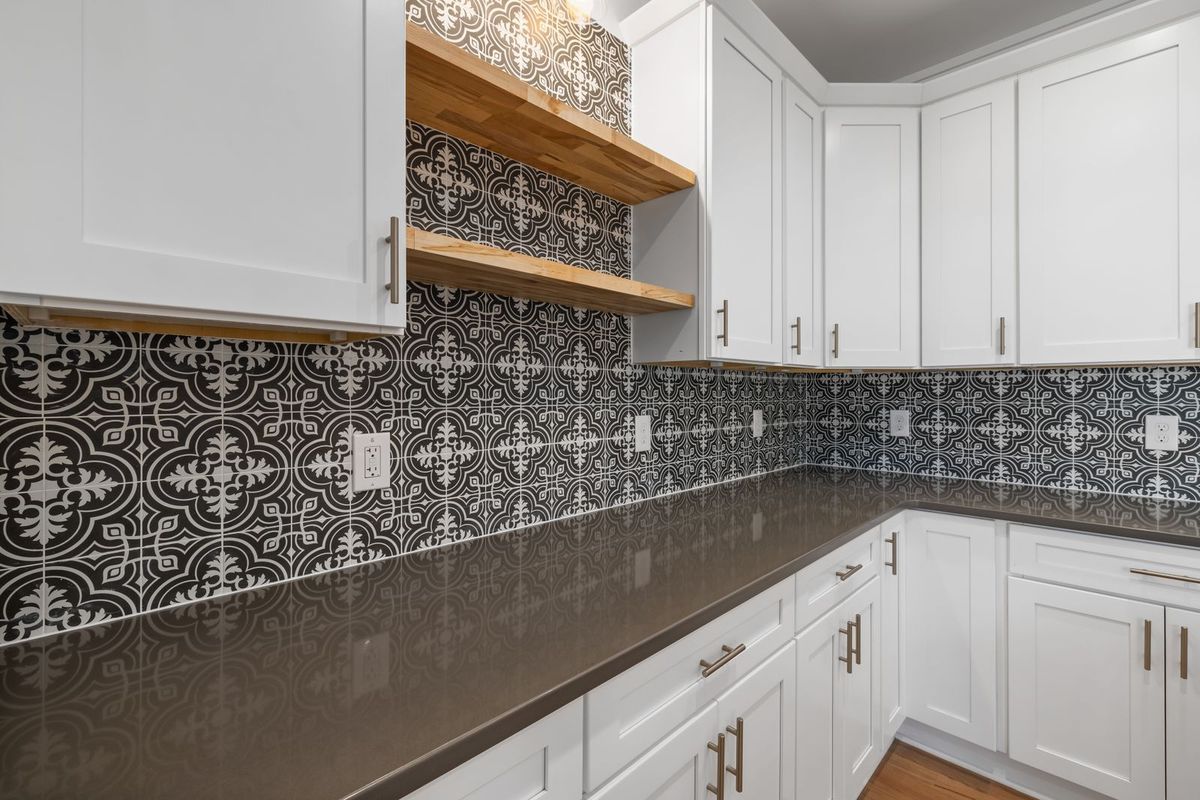
The short answer
Measure the area, add 10% for cuts, and divide by how much one sheet really covers. That last part matters: many peel-and-stick sheets overlap their neighbors, so a sheet covers less than its size. The calculator uses each brand’s own coverage figure and rounds up to whole packs or boxes.
How to measure
- Backsplash: measure the length of each section along the countertop and add them up. Measure the height from the countertop to the bottom of the upper cabinets.
- Floor: measure the room’s width and length at floor level. For an L-shaped room, split it into rectangles and add the results. For planks, the vinyl plank flooring calculator also works out the rows and the gap at the walls.
- Product: pick your tile from the list, or choose “other product” and enter the coverage per pack and the number of pieces from the product page.
Packs for common backsplashes
How many packs a backsplash of 18 in needs, with 10% extra for cuts:
| Backsplash (18 in tall) | Smart Tiles subway, 10.95 × 9.7 in | Art3d 12 × 12 in sheets |
|---|---|---|
| 4 ft | 3 packs | 1 pack |
| 6 ft | 4 packs | 2 packs |
| 8 ft | 6 packs | 2 packs |
| 10 ft | 7 packs | 3 packs |
| 12 ft | 8 packs | 3 packs |
| 15 ft | 10 packs | 4 packs |
How we calculate
This is the method the brands’ own calculators use:
- Area: length × height for a backsplash, width × length for a floor.
- Waste: plus 10% for cuts and mistakes. Smart Tiles, Tic Tac Tiles, Commomy and TrafficMaster all recommend that amount. You can turn it off.
- Pieces: the area divided by what one piece covers, rounded up. For overlapping sheets we use the coverage the brand publishes (for example, Art3d says 10 sheets cover about 8.2 sq ft), not the sheet’s size.
- Packs: pieces divided by pieces per pack or box, rounded up.
Worked examples
Example: A kitchen backsplash with subway tiles
What we know
- Backsplash: 10 ft long, 18 in tall
- Product: Smart Tiles subway, 10.95 × 9.7 in (pack of 4), covering 0.62 sq ft per piece
How it works out
- Area: 15 sq ft, plus 10% for cuts = 16.5 sq ft.
- 16.5 sq ft ÷ 0.62 sq ft per piece = 27 pieces (rounded up).
- 27 pieces ÷ 4 per pack = 7 packs (rounded up), with 1 spare.
Buy 7 packs.
Example: The same backsplash with 12 × 12 in sheets
What we know
- Backsplash: 10 ft long, 18 in tall
- Product: Art3d 12 × 12 in sheets (pack of 10), covering 0.82 sq ft per piece
How it works out
- Area: 15 sq ft, plus 10% for cuts = 16.5 sq ft.
- 16.5 sq ft ÷ 0.82 sq ft per piece = 21 pieces (rounded up).
- 21 pieces ÷ 10 per pack = 3 packs (rounded up), with 9 spares.
Buy 3 packs.
Example: A small bathroom floor
What we know
- Floor: 5 ft by 8 ft
- Product: 12 × 12 in tiles, 30 sq ft box (TrafficMaster), covering 1 sq ft per piece
How it works out
- Area: 40 sq ft, plus 10% for cuts = 44 sq ft.
- 44 sq ft ÷ 1 sq ft per piece = 44 pieces (rounded up).
- 44 pieces ÷ 30 per box = 2 boxes (rounded up), with 16 spares.
Buy 2 boxes.
Before you stick: stove, walls and removal
- Near the stove: most brands ask for a gap between the tiles and a cooktop without a back panel, from 8 in (Smart Tiles) to 16 in (Art3d). Follow the instructions for the tiles you buy.
- Wall prep: Smart Tiles says to wait 21 days after painting, clean with TSP rather than dish soap, and avoid textured walls and unpainted drywall.
- Not for showers: Smart Tiles, Art3d and Lucida all say their tiles aren’t for shower walls.
- Removal: Smart Tiles suggests warming each tile with a hair dryer before peeling it off. If you want the tiles to come off cleanly later, avoid the spray adhesive some brands suggest for textured walls.
Peel-and-stick tile counts as Medium deposit risk: it’s designed to be removable, but it can pull paint, and some brands describe their tiles as a long-term install. Check your lease and ask your landlord in writing if you’re not sure.
Wondering whether a backsplash is worth it for the time you’ll live there? The renter upgrade cost calculator spreads the cost over your stay, minus anything you’d keep. Updating the cabinets too? The cabinet hardware calculator finds knobs and pulls that fit the screw holes already there.
Frequently asked questions
How much peel and stick tile do I need?
Multiply length by height to get the area, add 10% for cuts, then divide by how much one sheet actually covers and round up to whole packs. Use the coverage the brand lists, not the sheet size, because many sheets overlap.
Why doesn't a 12 × 12 inch sheet cover a full square foot?
Many peel-and-stick sheets overlap their neighbors along the grout lines, so part of every sheet is hidden. Art3d, for example, says 10 of its 12 × 12 in sheets cover about 8.2 sq ft, not 10 sq ft.
How tall is a standard kitchen backsplash?
Cabinet installation guides usually leave about 18 in between the countertop and the bottom of the upper cabinets, so that's the calculator's default. Measure yours, especially behind the range or under a window.
Can peel and stick tile go behind a stove?
Only with enough distance. Brands ask for a gap between the tiles and a cooktop that has no back panel, from 8 in to 16 in depending on the brand. Check the instructions for the tiles you buy.
Should I subtract outlets and windows?
Small cutouts like outlets don't save tiles, because you still cut around them. For a window or a section with a different height, measure each rectangle separately and add the lengths, as Smart Tiles and Commomy suggest.
Can I use peel and stick tile on textured walls?
Usually not. Smart Tiles lists textured walls and unpainted drywall as surfaces to avoid, and Art3d doesn't recommend unpainted gypsum or stucco. The tiles need a smooth, clean, painted surface to hold and come off cleanly.
How much extra peel and stick tile should I buy?
About 10%. Smart Tiles, Tic Tac Tiles, Commomy and TrafficMaster all suggest that much for cuts and mistakes, and the calculator adds it unless you turn it off.
Will peel and stick tile damage the wall when I move out?
It can. Smart Tiles says its tiles come off practically without damage if you warm each one with a hair dryer first, while Commomy calls its tiles a more permanent solution. Choose a brand that says its tiles are removable, and test one in a hidden spot.
Next step
Peel and Stick Wallpaper CalculatorEnter your wall and roll size to see how many rolls of peel-and-stick wallpaper to buy, with pattern matching and trim included.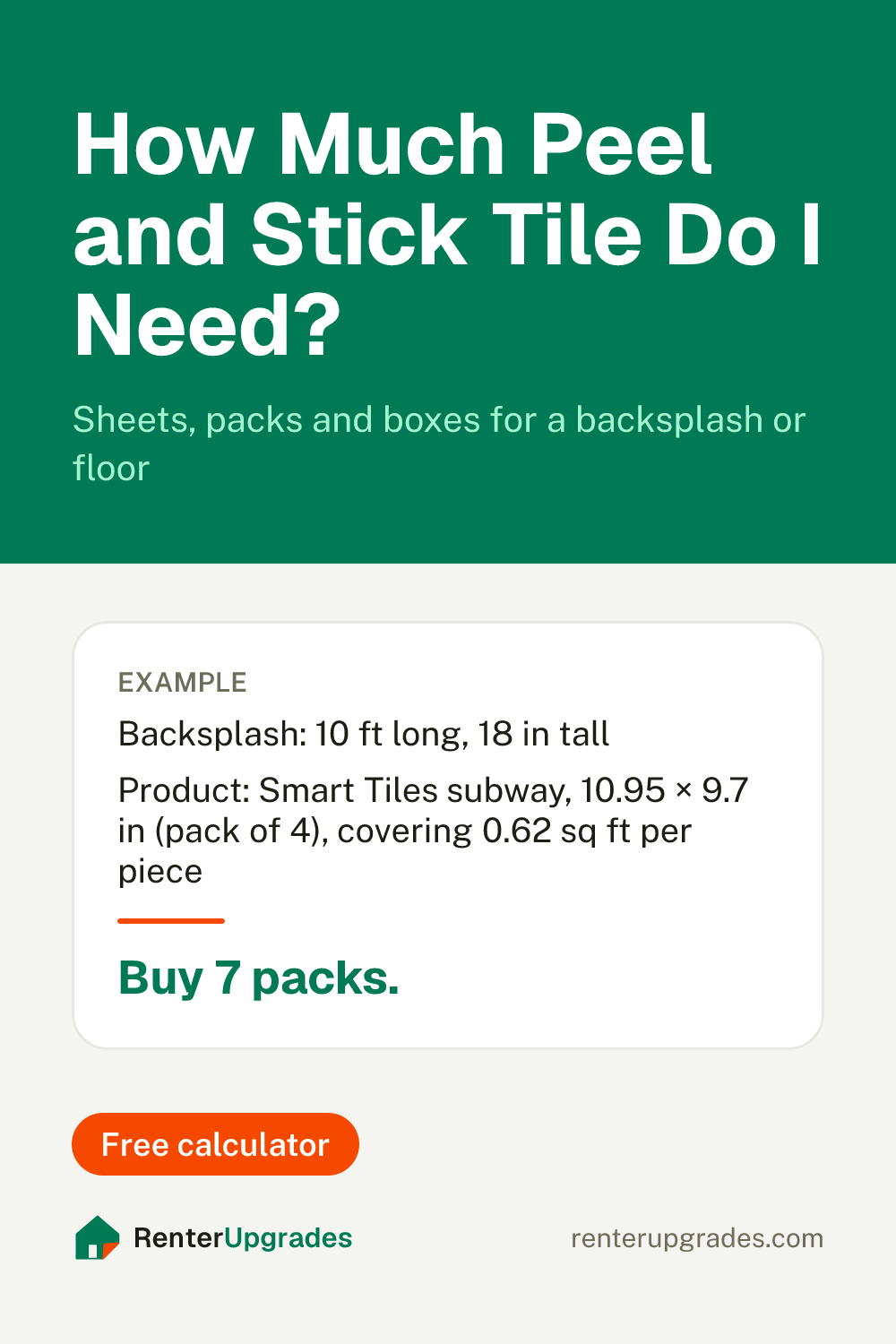
Save it for later
Pin this page so it's handy when you're ready to hang things.
Save to Pinterest (opens in a new tab)