
Peel and Stick Wallpaper Calculator
Enter your wall and roll size to see how many rolls of peel-and-stick wallpaper to buy, with pattern matching and trim included.
By Tess Mullins · Updated
Your wall
You need
3 rolls
That's 6 strips cut 98 in long, 2 strips per roll.
- The rolls cover about 85 sq ft for 80 sq ft of wall. The rest is trim and pattern matching.
- Check the roll size on the product page: it varies by brand. How we calculate
- Deposit Risk: Medium
- Landlord Permission: Check your lease
- Take It With You: No
The short answer
Count strips, not square feet. Divide your wall width by the roll width and round up: that’s how many full-height strips you need. Then work out how many strips one roll gives you at your wall height, and divide. The table below shows the answer for common walls.
The calculator adds the trim at the top and bottom and the extra length a pattern needs to line up, which is where most estimates go wrong.
How to measure your wall
- Width: measure straight across at the widest point, doors and windows included. Covering more than one wall? Add the widths together.
- Height: measure from the floor (or the top of the baseboard) to the ceiling at the tallest point.
- Roll size: check the product page for the roll’s width and length. Sizes vary by brand, and some brands sell double rolls: Tempaper’s standard double roll is 20.5 in × 33 ft (56.38 sq ft), and its designer collections come on a 27 in × 27 ft roll. Rolls sold online by smaller brands are often 17.7 in × 118 in (45 cm × 3 m), which is in the list too. Pick “Other size” for anything else.
- Pattern repeat: if the design has a pattern, the product page lists the repeat and the match type (straight or drop).
Rolls for common wall sizes
How many rolls an 8 ft tall wall needs, with no pattern to match and the calculator’s standard trim allowance:
| Wall width (8 ft tall) | 20.5 in × 16.5 ft | 20.5 in × 18 ft |
|---|---|---|
| 6 ft | 2 rolls | 2 rolls |
| 8 ft | 3 rolls | 3 rolls |
| 10 ft | 3 rolls | 3 rolls |
| 12 ft | 4 rolls | 4 rolls |
| 14 ft | 5 rolls | 5 rolls |
| 16 ft | 5 rolls | 5 rolls |
How we calculate
This is the strip method the manufacturers describe, with their allowances:
- Strips: we divide the wall width by the roll width and round up. Neighboring strips overlap by about 0.5 in at the seams (Tempaper and Spoonflower describe a slight overlap), so each strip after the first covers a little less than its full width.
- Strip length: wall height plus 2 in for trimming at the top and bottom, the low end of what brands suggest. You can change it.
- Pattern: with a pattern, each strip is rounded up to a whole number of repeats so the design lines up. A half drop adds half a repeat, because every other strip shifts down.
- Rolls: strips can’t be joined end to end, so we count how many full strips fit in one roll, then how many rolls cover all the strips. The optional extra adds 15%, the overage Chasing Paper suggests.
Worked examples
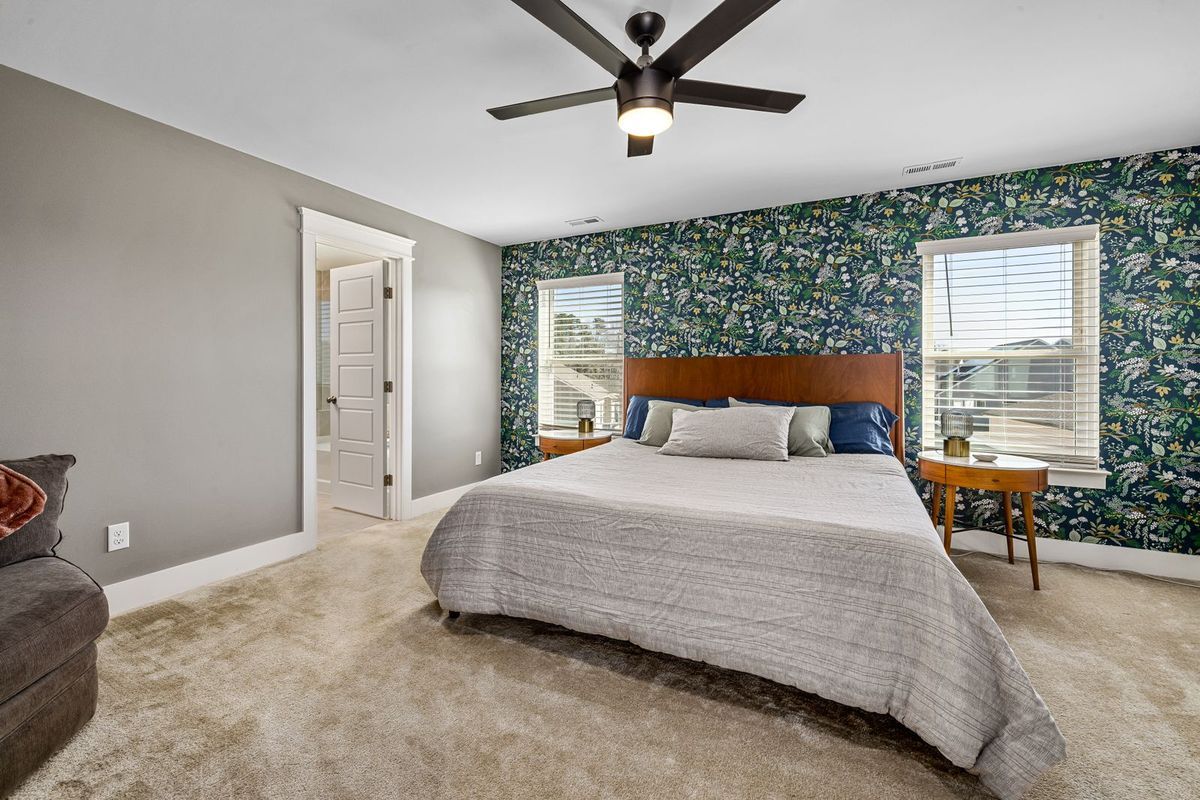
Example: One accent wall, no pattern to match
What we know
- Wall: 10 ft wide, 8 ft tall
- Rolls: 20.5 in wide, 16 ft 6 in long
- Pattern: random, no matching
How it works out
- Strips: 10 ft of wall ÷ about 20 in per strip (after the 0.5 in seam overlap) = 6 strips.
- Each strip is 96 in of wall plus 2 in to trim = 98 in.
- One roll gives 2 full strips, so 6 ÷ 2 = 3 rolls (rounded up).
Buy 3 rolls.
Example: A bedroom wall with a straight-match pattern
What we know
- Wall: 12 ft wide, 8 ft tall
- Rolls: 20.5 in wide, 18 ft long
- Pattern: 21 in repeat, straight match
How it works out
- Strips: 12 ft of wall ÷ about 20 in per strip (after the 0.5 in seam overlap) = 8 strips.
- Each strip is 96 in plus 2 in to trim, rounded up to whole 21 in pattern repeats = 105 in.
- One roll gives 2 full strips, so 8 ÷ 2 = 4 rolls (rounded up).
Buy 4 rolls.
Example: Two walls with a half-drop pattern
What we know
- Wall: 22 ft wide, 9 ft tall
- Rolls: 27 in wide, 27 ft long
- Pattern: 18 in repeat, half drop match
How it works out
- Strips: 22 ft of wall ÷ about 26.5 in per strip (after the 0.5 in seam overlap) = 10 strips.
- Each strip is 108 in plus 2 in to trim, rounded up to whole 18 in pattern repeats, plus half a repeat for the drop = 135 in.
- One roll gives 2 full strips, so 10 ÷ 2 = 5 rolls (rounded up).
Buy 5 rolls.
Before you stick: walls, paint and removal
Peel-and-stick wallpaper is made to come off, but the wall underneath decides how cleanly it does.
- Paint finish: Tempaper recommends eggshell, satin or semi-gloss paint and warns that flat or matte paint can come off with the paper. If your walls are flat paint, test a small piece in a hidden spot first.
- Fresh paint: wait at least 30 days after painting. Tempaper, Spoonflower and Loomwell all give that number.
- Texture: smooth walls work best. WallPops says its wallpaper isn’t made for textured walls.
- Removal: peel slowly and keep the paper close to the wall instead of pulling it toward you. Spoonflower suggests pulling downward.
Not sure an accent wall is worth it for a short lease? The renter upgrade cost calculator shows what it costs you per month. If your landlord lets you paint instead, the paint calculator works out the gallons for the same wall.
Take a photo of the bare wall before you start, and keep one leftover strip. If a corner lifts or a seam needs patching later, you’ll have matching paper.
Frequently asked questions
How much peel and stick wallpaper do I need?
Count strips, not square feet. Divide the wall width by the roll width and round up to get the number of strips. Then see how many full-height strips one roll gives you, and divide. The calculator does both steps and adds trim and pattern matching.
How many square feet does a roll of peel and stick wallpaper cover?
A 20.5 in × 16.5 ft roll covers 28.18 sq ft, and a 20.5 in × 18 ft roll covers 30.75 sq ft. You can't use all of it, though: every strip loses a little to trimming and pattern matching, which is why counting strips is more accurate.
Do I subtract doors and windows?
No. Spoonflower and Loomwell both say to measure the full wall width, doors and windows included. Strips still run above and below them and get trimmed to fit, so subtracting them usually leaves you short.
What is a pattern repeat?
It's how far down the wall a pattern runs before it starts again. With a straight match, every strip lines up the same at the ceiling. With a half drop, every other strip shifts down by half a repeat, so you need a bit more length per strip.
How much extra wallpaper should I buy?
Chasing Paper suggests about 15% extra, and Tempaper suggests rounding your order up. Tick the extra option in the calculator if you're new to wallpaper or the pattern is tricky to line up.
Will peel and stick wallpaper damage my walls?
It's designed to come off cleanly, but it can still pull paint. Brands warn against flat and matte paint, ask you to wait 30 days after painting, and say to peel slowly, close to the wall. That's why we rate it Medium deposit risk.
Can I put peel and stick wallpaper on textured walls?
Usually not. WallPops says its wallpaper isn't designed for textured walls, and Tempaper allows nothing rougher than a light orange peel texture. Test a small piece first.
Do I need my landlord's permission?
Check your lease. Peel-and-stick wallpaper is removable, but it changes how the walls look, and some leases ask you to get approval for anything applied to the walls. A short written request avoids surprises at move-out.
Next step
Peel and Stick Tile CalculatorEnter your backsplash or floor size and pick a product to see how many sheets, packs or boxes of peel-and-stick tile to buy.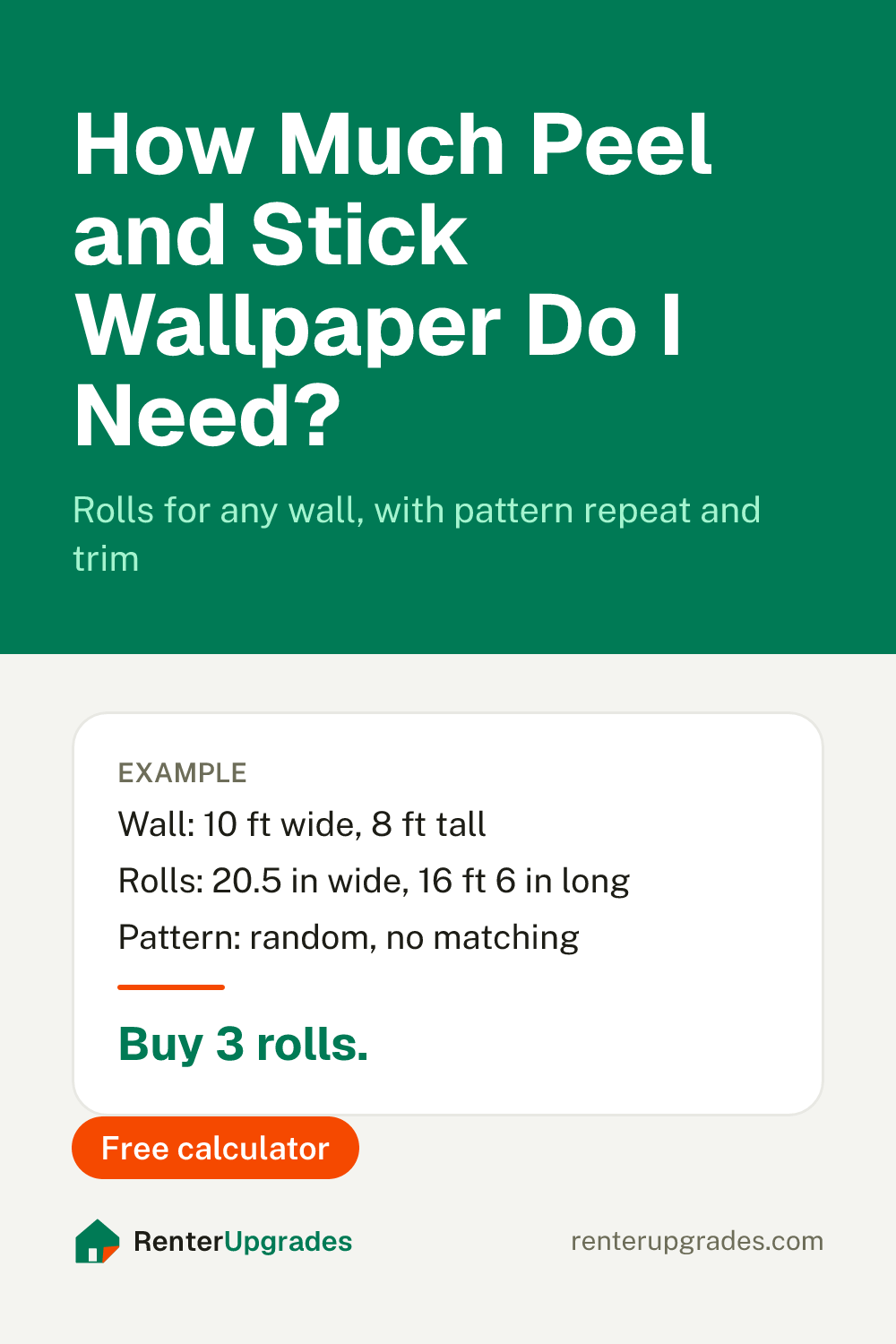
Save it for later
Pin this page so it's handy when you're ready to hang things.
Save to Pinterest (opens in a new tab)