
Apartment Hunting Checklist
Fill in the place you're seeing to get a checklist for the tour: scam checks before you go, what to look at room by room, what to ask, and what to do before you sign or pay.
By Tess Mullins · Updated
Checklist preview
Apartment hunting checklist
Apartment: [Address or listing]Toured: [Date]Rent asked: [Rent]
Use one checklist for each place you see. Check off what's fine, and write down anything that isn't, so you can compare them later.
Before you tour
- Set your rent budget, utilities included
- List your must-haves: bedrooms, commute, laundry, parking
- Search the address: other ads with another owner are a warning sign
- Check that the listing is on the rental company's own website
- Search the owner or company with the words complaint, review or scam
- Be wary of rent far below similar places nearby
The building
- The agent's business card and ID, or the owner's ID
- Entry doors lock, and halls and entrances are lit
- Laundry: in the unit, in the building or nearby
- Trash, recycling and package delivery
- Noise from the street, neighbors and the floor above
- Stairs or an elevator for moving day
The whole unit
- Natural light, and windows that open and lock
- Outlets in each room, and where they are
- Cell signal, and which internet providers serve the building
- Heat and air conditioning both work
- Smoke alarms in place
- No signs of pests: droppings, traps or bait
- No water stains, musty smell or mold
- No peeling or chipping paint, above all in a building from before 1978
- Measure the doorways and where big furniture goes
Kitchen
- Stove, oven, fridge and dishwasher all work
- Hot water and water pressure at the sink
- Under the sink: leaks or stains
- Cabinet and counter space
Bathroom
- The toilet flushes and its base is solid
- Hot water and pressure in the shower
- An exhaust fan or a window
- Caulk and grout: mold or gaps
Bedroom
- Room for your bed and dresser
- Closet space
- Window, blinds and privacy
Questions to ask
- The rent, the due date and how to pay it
- Which utilities are included, and what the others cost
- The security deposit, and when and how it comes back
- Every fee: application, move-in, amenities, parking
- The lease length, renewal and how rent increases work
- How much notice to move out, and the cost to leave early
- How to request repairs, and who to call in an emergency
- Whether renters insurance is required
- What you can change: paint, nails, shelves
- Whether there's a move-in inspection form
- Built before 1978? The lead paint disclosure and the EPA pamphlet
Before you sign or pay
- See the place, or have someone you know see it, before you pay
- Walk away if you're pushed to decide fast
- Never pay by wire transfer, gift card or cryptocurrency
- Private landlord: check the owner in the county's tax records
- Share your Social Security number only once you've agreed to rent
- Read the whole lease, and get every promise in writing
- Keep a copy of the signed lease and every receipt
General information, not legal advice. Check your lease and your state's law before you rely on it.
When to use this checklist
Use one for each place you see. It runs in the order of a tour: what to check before you go, the building, the unit room by room, the questions to ask, and what to do before you sign or pay. Your notes make it easy to compare places afterward.
Set your budget first: the rent affordability calculator checks the rent against your income, and the apartment utilities cost calculator adds the bills.
How to use the generator
- Add the address or listing, the tour date and the rent asked. They go at the top of the printout.
- Pick the layout: a studio or the number of bedrooms, and the bathrooms. Tick pets or parking if they matter to you.
- Check off what’s fine on the tour, and note anything that isn’t, or anything the landlord tells you.
- Print it or download the PDF to take along, or keep the draft on your phone.
Your answers stay in your browser. A draft is saved on this device until you press Clear, so start a new one for each place.
Sample apartment hunting checklist
Here’s a checklist part-way through a tour. The address and notes are made up.
Apartment hunting checklist
Apartment: 200 Oak Avenue, Unit 4CToured: April 17, 2027Rent asked: $1,350 a month
Use one checklist for each place you see. Check off what's fine, and write down anything that isn't, so you can compare them later.
Before you tour
- Done: Set your rent budget, utilities includedNote: Up to $1,400 with utilities
- List your must-haves: bedrooms, commute, laundry, parking
- Done: Search the address: other ads with another owner are a warning signNote: Same company on every listing
- Done: Check that the listing is on the rental company's own website
- Search the owner or company with the words complaint, review or scam
- Be wary of rent far below similar places nearby
The building
- Done: The agent's business card and ID, or the owner's IDNote: Leasing office card, ID matched
- Entry doors lock, and halls and entrances are lit
- Parking: where, the cost and guest parkingNote: Waitlist for a spot
- Laundry: in the unit, in the building or nearby
- Trash, recycling and package delivery
- Noise from the street, neighbors and the floor above
- Stairs or an elevator for moving day
The whole unit
- Natural light, and windows that open and lock
- Outlets in each room, and where they are
- Cell signal, and which internet providers serve the building
- Heat and air conditioning both work
- Smoke alarms in place
- No signs of pests: droppings, traps or bait
- No water stains, musty smell or mold
- No peeling or chipping paint, above all in a building from before 1978
- Measure the doorways and where big furniture goes
Kitchen
- Stove, oven, fridge and dishwasher all work
- Hot water and water pressure at the sink
- Under the sink: leaks or stainsNote: Old water stain: ask about it
- Cabinet and counter space
Bathroom
- The toilet flushes and its base is solid
- Hot water and pressure in the shower
- An exhaust fan or a window
- Caulk and grout: mold or gaps
Bedroom
- Room for your bed and dresser
- Closet space
- Window, blinds and privacy
Questions to ask
- The rent, the due date and how to pay it
- Which utilities are included, and what the others cost
- The security deposit, and when and how it comes back
- Every fee: application, move-in, amenities, parking
- The lease length, renewal and how rent increases work
- How much notice to move out, and the cost to leave early
- How to request repairs, and who to call in an emergency
- Whether renters insurance is required
- What you can change: paint, nails, shelves
- Whether there's a move-in inspection form
- Built before 1978? The lead paint disclosure and the EPA pamphlet
Before you sign or pay
- See the place, or have someone you know see it, before you pay
- Walk away if you're pushed to decide fast
- Never pay by wire transfer, gift card or cryptocurrency
- Private landlord: check the owner in the county's tax records
- Share your Social Security number only once you've agreed to rent
- Read the whole lease, and get every promise in writing
- Keep a copy of the signed lease and every receipt
Spot a rental scam
The FTC describes how fake listings work: scammers copy a real listing or make one up, then take an application fee, a deposit or your personal details and disappear. Its advice:
- Search the address and the owner’s name. Other ads for the same place under a different owner or company are a warning sign, and the listing should be on the rental company’s own website.
- Be wary of a bargain. Rent far below similar places nearby, an owner who can’t show the place, and pressure to decide fast are all red flags.
- See it before you sign or pay, in person or through someone you know. Check the agent’s business card and ID, or for a private landlord, look up the owner in the county’s tax records.
- Pay the safe way. Anyone who insists on a wire transfer, gift cards or cryptocurrency is running a scam: once that money is sent, you probably can’t get it back.
- Guard your details. A landlord doesn’t need your Social Security number or credit score until you’ve agreed to rent.
Questions to ask before you sign
- The rent and the bills: the rent, the due date and how to pay, and which utilities are included.
- The deposit and fees: the amount and when it comes back, and every fee. The security deposit calculator shows your state’s limits and deadlines.
- The lease: its length, renewal and how rent increases work (the rent increase calculator puts a number on one), and the notice and cost to leave early.
- Living there: how to request repairs, whether renters insurance is required, and what you can change, like paint or shelves.
- The bathroom: a tape measure tells you whether the toilet has room on each side and a walkway in front; the small bathroom layout calculator checks the numbers against the code minimums.
- Moving in: whether there’s a move-in inspection form. Either way, record the unit’s condition with the move-in checklist.
Get the answers that matter in writing, ideally in the lease.
Lead paint in older buildings
Lead-based paint for homes was banned in 1978, and peeling or chipping lead paint is a hazard. For most housing built before 1978, the EPA says the landlord must, before you sign:
- give you the pamphlet Protect Your Family From Lead in Your Home,
- tell you about any known lead-based paint and hazards, and share their records, and
- include a Lead Warning Statement with the lease.
There are exceptions, such as leases of 100 days or less and studios where no child under 6 will live. You can ask the landlord for a paint inspection by a certified inspector before you sign, though the rule doesn’t require one.
Once you’ve chosen
- Plan the move with the moving checklist, which dates each step from your move date.
- Set up the new place with the first apartment checklist if it’s your first.
- Record its condition on move-in day with the move-in checklist, before you unpack.
Take a photo of the building’s front door or street sign first, then photos of each room. When you’ve seen several places, the first photo tells you which ones belong together.
Frequently asked questions
What should I look for when touring an apartment?
Locks and lighting at the entrance, laundry and parking, noise, natural light, heat and air conditioning, outlets, cell signal, and smoke alarms. Run the water for pressure and heat, try the appliances, and look for signs of pests, leaks, mold and peeling paint.
What questions should I ask a landlord before renting?
Ask about the rent and how to pay it, which utilities are included, the security deposit, every fee, the lease length and renewal, the notice needed to move out, how repairs work, whether renters insurance is required, what you can change, and whether there's a move-in inspection. Get the answers that matter in writing.
How can I tell if a rental listing is a scam?
The FTC lists the warning signs: other ads for the same address under another owner's name, rent far below similar places nearby, an owner who can't show the place, pressure to decide fast, and a demand to pay by wire transfer, gift card or cryptocurrency. Search the address and the owner's name before you go.
Should I pay a deposit before seeing the apartment?
No. The FTC suggests looking at the property before you sign or pay, in person or through someone you know, and warns that anyone who insists on payment by wire transfer, gift card or cryptocurrency is running a scam.
When should I give a landlord my Social Security number?
Only once you've agreed to rent. The FTC says a landlord doesn't need your Social Security number, credit score or other sensitive information until then, and that most landlords pull your credit themselves rather than asking you for it.
What is a lead paint disclosure?
For most housing built before 1978, federal law requires the landlord to tell you about any known lead-based paint and hazards, share their records, and give you the EPA pamphlet Protect Your Family From Lead in Your Home before you sign. The EPA lists exceptions, such as leases of 100 days or less and studios where no child under 6 will live.
Next step
How Much Rent Can I Afford?Enter your pay before taxes and the utilities you'll pay to see the most rent that keeps housing within 30% of your income, what landlords' income rules allow, and how that compares with what renters in your state pay.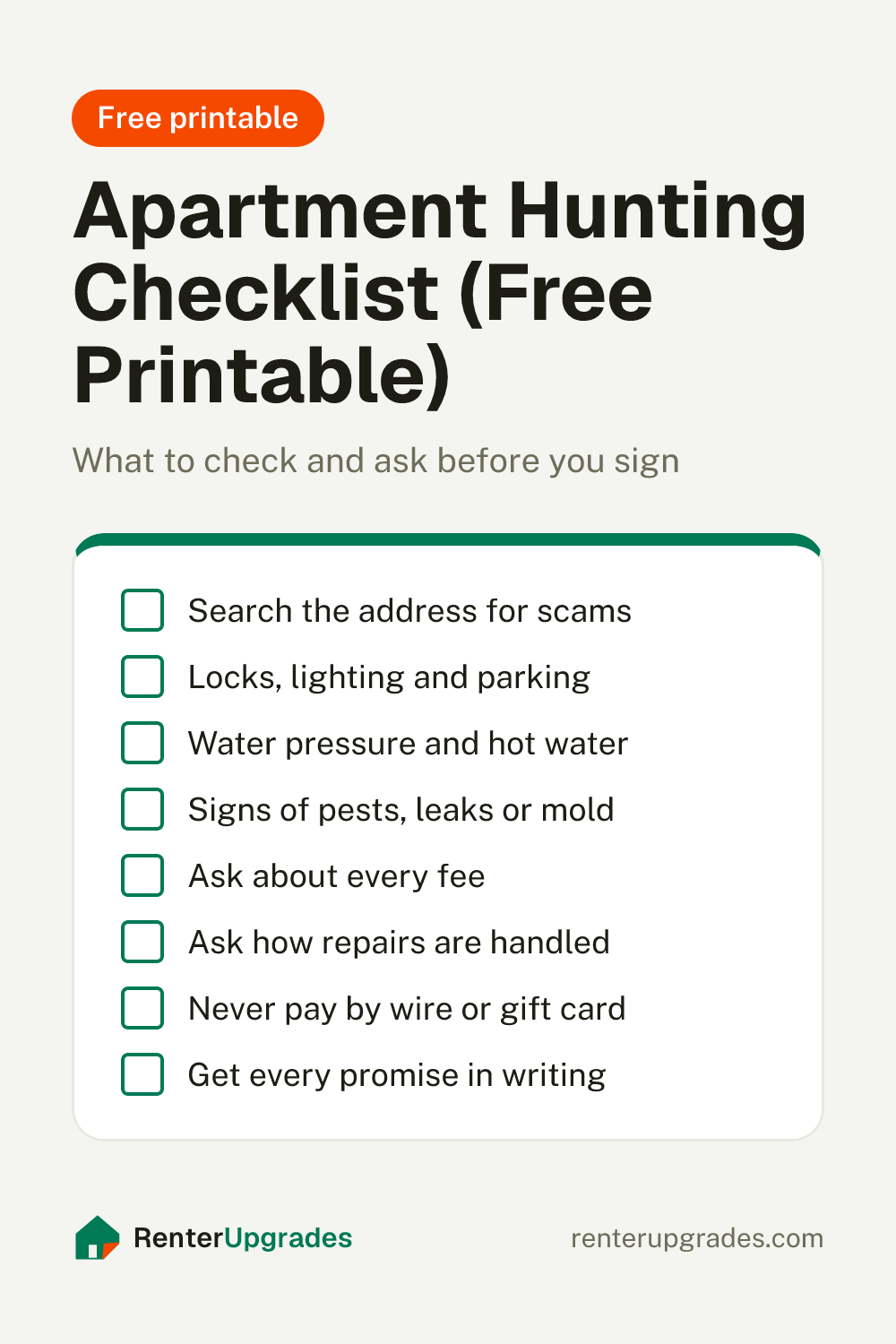
Save it for later
Pin this page so it's handy when you're ready to hang things.
Save to Pinterest (opens in a new tab)